AI Visibility
Through Earned Media
When someone asks an AI assistant who to trust, it names two or three organisations. This session shows you how to become one of them.
The method is earned media, because that is what AI assistants cite. The proof is a live audit of what AI says about you today, run from inside the earned media OS I built and run.
By Syed Irfan Ajmal · Founder of EMOS · CEO of DMR.agency · Profiled as a case study in Harvard Business Review; quoted in Forbes.

Every keynote and workshop
opens with a live audit.
Attendees put real questions to ChatGPT, Claude and Gemini about their own organisation and a competitor, score each answer as accurate, missing or invented, then trace the cited answers back to the coverage they were built from. Expect at least one confident wrong answer about a real brand in the room. That is the moment the session is built around.
Your questions, your brand, a one-page score sheet.
What came back, including the fabrications.
Which placements, quotes and bylines got cited, and which never do.
One asset. One placement. Six compounding returns.
A single authority asset and a single piece of coverage do not stop at the placement. They compound around a six part flywheel. Spin it long enough and it starts turning on its own, because journalists cite sources other journalists have already cited.
Visibility now includes being the name in the AI answer, not only the link on page one.
Hover or tap a segment to read each return
Paid attention is getting worse.
Earned attention compounds.
A credible mention in a publication your buyers already trust keeps working long after it goes live, and it makes the next mention easier to get. The moment you stop paying for an ad, the attention stops. And AI has just changed earned media from both sides at once.
AI agents can now do the core jobs of a PR team.
The work of earning coverage breaks into six stages. Each one now has an AI agent doing the heavy lifting, and each maps to a tool in the OS I run.
AI assistants and AI search now decide which brands get cited, recommended and seen.
And they reward exactly what earned media produces: authoritative coverage, citations, and genuine expert content.
AI visibility is earned,
not optimised.
AI assistants cite third-party coverage, not your homepage. Generative engines increasingly decide which brands surface in an answer. They stake their credibility on citation quality, so they reward authoritative coverage, third party citations, and real expert content. Earn it once and it pays out to people, to search, and to the machines that cite you, at the same time.
People
Readers, buyers, and the journalists who cover them still trust editorial coverage far more than an ad.
A credible, quotable source with a real point of view.
Search engines
Google weighs links, mentions and expertise signals to decide who ranks and who stays buried.
Authority signals from independent sites.
Generative engines
LLMs and AI search stake their reputation on citation quality, so they surface brands with genuine authority.
To cite the most trusted, most mentioned, most independently covered source.
Six jobs that used to need a team.
AI can now run every one. None of them without a human.
Each stage maps to a tool in EMOS, the earned media OS I built and run, so the talk is backed by live data, not slideware. String the six together and you have a full pipeline where AI does the manual work and a human decides at every gate. No code, no autopilot.
Drafts, researches, or even builds the tool, report, calculator or dataset itself.
Reviews and approves before anything moves to the next stage. No stage skips this.
Scroll sideways on narrow screens to see all six stages
Signal
Surface the topics about to break before the market notices.
Authority Content
Build the research, tools and data that earn coverage.
Verify
Screen out AI slop and unverified claims.
Match
Find the right journalists for the right stories.
Pitch
Draft and send outreach, scored and tuned.
Attribute
Track what the coverage actually produced.
Treat the AI as a co-author, not a vending machine. You don’t drop a coin and collect a finished pitch. You brief it, push back, rewrite. Your name goes on the final.
Even with a human deciding at every gate, one operator now does the earned media work of ten, if not more.
In the room, we do not just describe the pipeline. We run it live.

- 01.Run a repeatable audit of what AI assistants say about your organisation, score it, and trace every citation to its source.
- 02.Run a full earned media pipeline with AI and no code.
- 03.Brief an AI agent for each of the six stages, from signal to attribution.
- 04.Catch AI slop and unverified claims before they ship.
- 05.Read the numbers that prove a placement actually worked.
- It still fabricates and over claims. Verification is not optional.
- It cannot build a real relationship with a journalist.
- It misreads nuance, timing and embargoes.
- It cannot make the judgment call on what is genuinely newsworthy.
- It confidently repeats outdated facts about your own brand. The audit is how you find them.
The session is candid about all of it. That is the point.
This session runs on live instruments, not slideware.
KSA Retail & Consumer Radar
25 sourced signals on Saudi Arabia's consumer economy: e-commerce, retail brands, lifestyle retail, and the macro picture, wired to live press-coverage data.
Open the radar →KSA Tourism EditionKSA Tourism & Hospitality Radar
28 sourced signals across giga-projects, mega-events, hospitality, and faith travel. The instrument the travel edition of this session runs on.
Open the radar →Global EditionEarned Media Radar
The live map of what the press is covering across PR, earned media, SEO, and AI search, powered by SignalIQ.
Open the radar →The questions this session tends to open.
Which jobs of a PR team can AI agents genuinely run today, and where do they still fail?
How do you pair AI with human judgment so the work earns the trust of journalists, customers, LLMs and AI search?
How do we get cited by ChatGPT and Gemini when a buyer asks who to trust, and what do they actually reward?
Four countries on stage. Live audiences up to ~500.
Profiled as a case study in Harvard Business Review. Quoted in Forbes USA. Bylines in Forbes Middle East, World Bank publications, HuffPost, SEMrush and SERPed.
“You’ve got to know your team well. You have to know what excites them, what scares them, and what their deepest desires and biggest challenges are.”
The article’s pull quote, from the case study on Syed Irfan Ajmal in “How to Motivate Your Team During Crunch Time” by Rebecca Knight, Harvard Business Review, 18 December 2019.
One session,
four ways to run it.
Same content, tuned to your room. Every format runs in person or virtual. The live audit opens every keynote and workshop, or runs on its own as the audit session. Tell me the slot and the audience, and I will tell you which one fits.

AI Visibility Audit Session
The live audit block on its own. Each attendee puts real questions to ChatGPT, Claude and Gemini about their organisation, scores the answers, traces the citations, and leaves with a scored audit they can repeat.

Keynote
A fast, story-led mainstage talk that maps the shift from both sides, opening with a live audit of what AI currently says about a brand in the room. Best to open or close a track.

Interactive workshop
The full working session: live AI visibility audit, idea sprint, spot-the-slop, and a live pitch clinic on the room's real pitches. Best as a hands-on breakout.

Panel or fireside
I bring the live data and the contrarian takes, you bring the co-panelists. Happy to take the moderator seat instead. Best for a debate on AI, PR and earned media.
Not sure which? Send the event, the slot and the audience, and I will recommend the format that moves your metric.
Fine, but is he any good
in the room?
Six people who booked the session, hosted it, or sat through it, in person and online. Organisers first, because the question an organiser actually has is whether I will be easy to programme.
Syed Irfan spoke at our event the M Powered Summit in Dubai on Personal Branding. Based on the feedback we got from the audience, it was a highly informative talk and everyone benefitted from it. We are glad to have him as a speaker and we highly recommend him. …

The audience enjoyed his super practical session and approach to helping them understand how to grow an audience online and traffic to websites using various smart methods and enjoyed his friendly and positive presentation style, clear slides and concise answers to many questions he received.

… it was a pleasure calling Irfan as a distinguished guest speaker for IYDC2015 (Iqra Youth Development Conference) which featured more than 40 international and local speakers in Peshawar. … His friendly nature and humble personality make attendees interact with him a lot more easily (in comparison to other speakers).

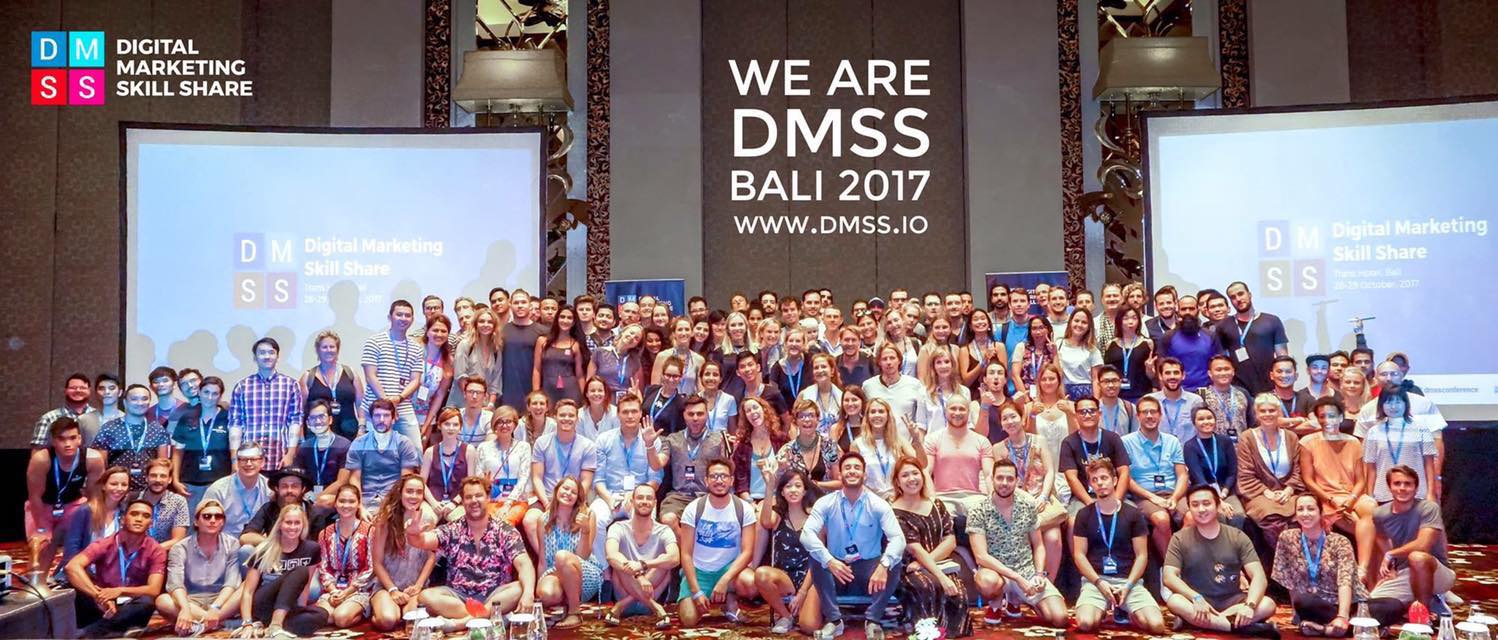
Syed spoke at our conference www.dmss.io … He is an excellent public speaker … He comes highly recommended!!

Irfan's talk on How to Get Published in Large Publications at Muslim Marketing Summit was insightful. It was based on the core idea of building authentic trustworthy relationship with media. I highly recommend Irfan for Media & PR related solutions.

Being a great speaker takes one part art, one part science, a whole lot of experience, an understanding of how to lead a potential customer through storytelling, emotional intelligence, and personal clarity. Irfan delivers on all of this and more. … If you are looking for a dynamic global speaker, reach out to Irfan. He will turn possibilities into realities.

Quoted verbatim from public LinkedIn recommendations. An ellipsis marks a trim, nothing else has been changed. Job titles are current. The chip beside each name is the room that person is describing, which in most cases predates the title.
Bring this session to your stage.
Organizers, send the event, audience and the metric you want moved. Curious about the content, ask a question. Response inside a working day, no salesy follow-up.
Real case studies.
Zero filler.
GEO · SEO-PR · Content Marketing
One or two emails a month. The campaigns I’m building right now, what’s working in earned media, and the case studies behind the numbers. Unsubscribe whenever.